Specialized services for separation anxiety dogs.
Intensive, fear free support for dogs with separation anxiety, and the people who love them.
You love your dog, but their separation anxiety is taking a toll on your bond (and on your life).
Separation-related behaviour can be distressing for us, as well as our dogs. When you’re forced to choose between sacrificing your social life or seeing your dog panic, it feels like there’s no good option.
Figuring out how to help your separation anxiety dog can be challenging, but it doesn’t have to be.
Working with a separation anxiety specialist can help you:
Skip contradictory, vague, or downright harmful online advice
Understand and implement an evidence-based, force free training plan
Remove guesswork from the training process
Ask questions about your dog’s unique threshold
Evaluate other factors in your dog’s life that may impact their alone time progress
Effectively and humanely reach your goals
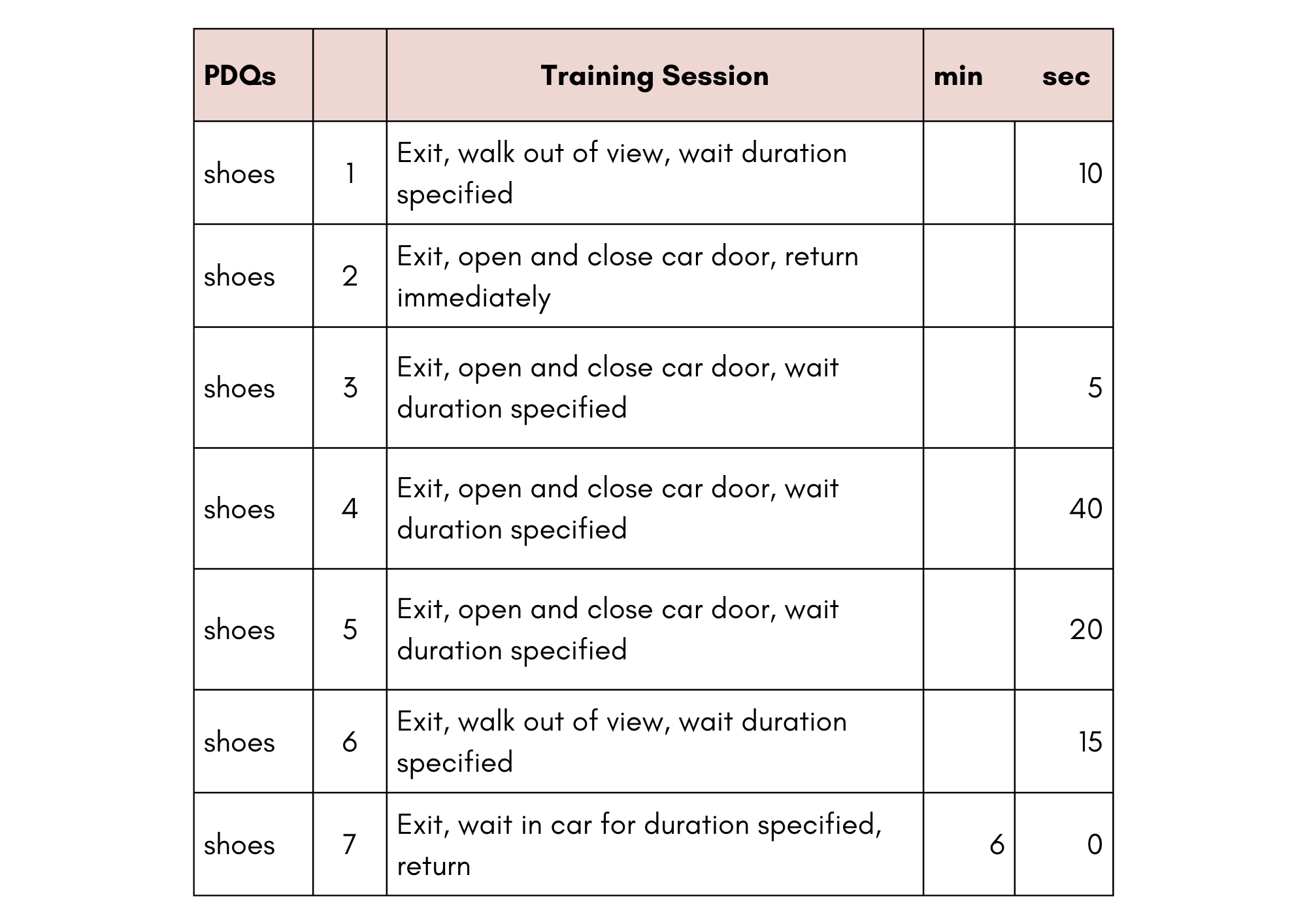
Individualized training plans.
Daily plan writing based on your dog’s last assessed level of comfort and their daily coping ability.
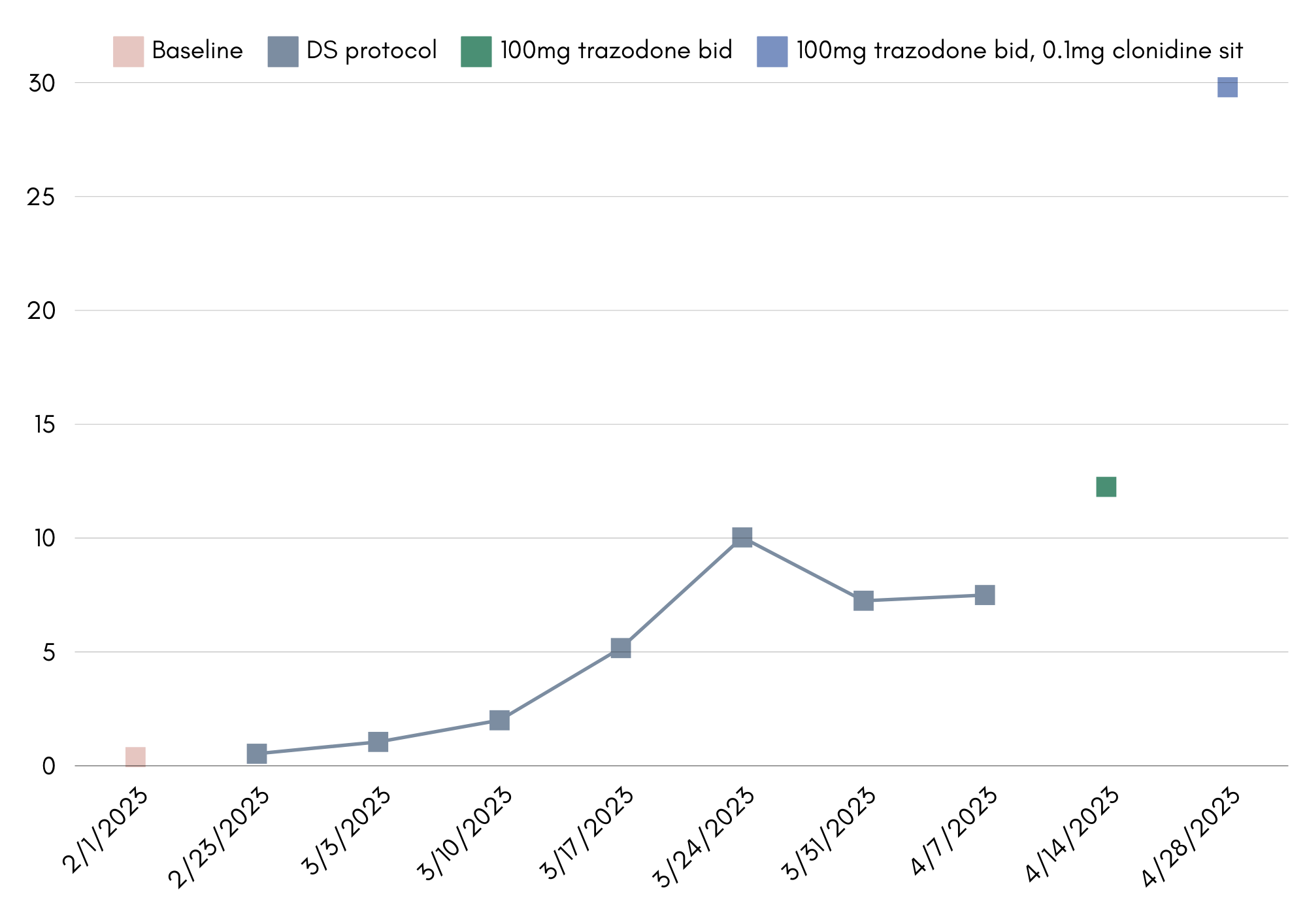
Custom data tracking & visualization.
Tracking, charting, and analyzing the things that support your dog’s learning experience.
Cheerleading, guidance, and feedback.
Weekly live check-ins, daily video review, and Whatsapp support between meeting.
You want to use a gentle, welfare-centred approach to address your dog’s separation anxiety.
You’re committed to managing absences and understand that you cannot make meaningful progress if you’re routinely leaving your dog home alone in distress.
You understand that separation anxiety is a panic disorder, and that like human phobias it will require time, patience, effort to recover.
You’ve tried to do some form of gradual exposure on your own, but you aren’t sure when to push your dog, or when to drop back.
You understand that learning is non-linear, behaviour is fluid, and your dog is an individual - we’re going to have a lot of highs throughout this process, but we’ll also experience the lows of regressions and plateaus.
You’re ready to invest up to a year, or more, into supporting your separation anxiety dog.
We’ll be a good fit if:
Plans & Pricing
Please note that the consultation fee is not included in the intensive packages. All clients must begin with an initial consultation.
Intensives renew at four week packages for $600 CAD.
Provincial sales tax applies to Canadian clients.
Initial Consultation
$199 CAD
90 minute intake appointment on Zoom
Discussion of health and behaviour history, as well as training goals
Data review, if applicable
An initial absence assessment
Referrals to relevant dog professionals for co-existing health and/or behaviour challenges
Guidelines and resources for moving forward with training, management, and enrichment
A data tracking template to keep detailed notes on your progress
Four Week Intensive
$799 CAD
Daily support during office hours via Whatsapp
20 individualized training plans based on your dog’s unique assessment and training data
5 live weekly 30 to 60 minute live assessments and progress discussion via Zoom
Video review of daily training sessions
Customized data tracking and charting based on behaviours relevant to your individual dog
Communication with your veterinarian as needed
Reduced renewal rate upon package completion
Eight Week Intensive
$1299 CAD
Daily support during office hours via Whatsapp
40 individualized training plans based on your dog’s unique assessment and training data
9 live weekly 30 to 60 minute live assessments and progress discussion via Zoom
Video review of daily training sessions
Customized data tracking and charting based on behaviours relevant to your individual dog
Communication with your veterinarian as needed
Reduced renewal rate upon package completion
Frequently Asked Questions
-
Every dog is different. Like working on any anxiety condition or phobia, recovery takes a long time and requires patience, a lot of repetitive work, and breaks. We speak in months, not weeks, when we talk about recovery. Most of the dogs I work with take between 1 to 2 years to reach alone time goals.
-
We use a process called gradual exposure, which is also how we address human phobias! Together, we’re going to find a version of alone time that your dog can handle. Slowly, as your dog learns how to self-regulate during these short, sweet absences, we dial up the intensity.
In the meantime, you’ll also be managing your dog’s alone time. This means that, aside from structured training sessions, you’re not leaving your dog for longer than they can handle. Managing your absences ensures that all alone time, from here on out, is safe alone time. Management is the cornerstone of a gradual exposure protocol. It stops your dog from rehearsing the behaviours we’re actively trying to modify, and it immediately ends their panic.
-
Part of my job as your trainer is to come up with ways to suspend absences that make sense for you and your family. Recovery is unlikely if your dog is continually being left to panic. Absence suspension is just as important as the training protocol when we’re working through separation anxiety, and it is a non-negotiable part of working intensively with me.
-
We will meet on Zoom, and using external cameras, to complete your first training session live together. At that point, we’ll ensure that you have access to the spreadsheet, can ask questions about recording data, and can understand the flow of a training session. The next morning, you’ll find a brand new training session in your spreadsheet. This training session will be written based on the information collected in your initial consultation, and based on how well your dog does on the first training session we run together.
You’ll receive up to four training plans per week, and we’ll meet once a week on a fifth day to do a live check-in and assessment. You’ll get two days off per week to recover with your dog. This work is tough on the human and the dog, and a couple of days to take a break is absolutely necessary.
Many clients continue to renew four week packages until they reach their goals. I’m here to continue writing training plans and conducting assessments as long as you feel like it’s supportive to you and your dog!
-
A dedication to managing absences, an open mind, a lot of love and compassion for what your dog is going through, and a willingness to prioritize training 4 to 5 days a week. Cameras are also incredibly helpful to support our work together. I like the Wyze cam, which can be shared with me and multiple members of your family at the same time.
-
Not necessarily, but there are many medications that can support a separation anxiety training plan. Medication, in conjunction with gradual exposure, is considered the gold standard approach for addressing separation anxiety in dogs. The vast majority of my clients are on anxiety medication for separation-related behaviours, and after beginning medication we typically see more consistent and more comfortable progress.
Still have questions? Take a look at the FAQ or reach out at jessica@theunderdogco.ca. If you’re feeling ready, go ahead and book your initial consultation.